


Brie and honey. I swear, this combination has no business being this addictive, but here we are. I am talking mild, buttery, creamy whipped brie with those subtle earthy, mushroomy undertones, all draped in the lavender-infused “liquid gold” we made together a few days ago. If you’ve never experienced the magic of creamed, floral honey hitting silky cheese, prepare to fall hard. This whipped brie with lavender honey is the kind of appetizer that creates those “stop-everything” cheeseboard moments. Precisely the ones where people pause mid-sentence, tilt their heads, and whisper, “Wait… what is that?” before shamelessly hovering with a piece of bread in hand for the rest of the night.
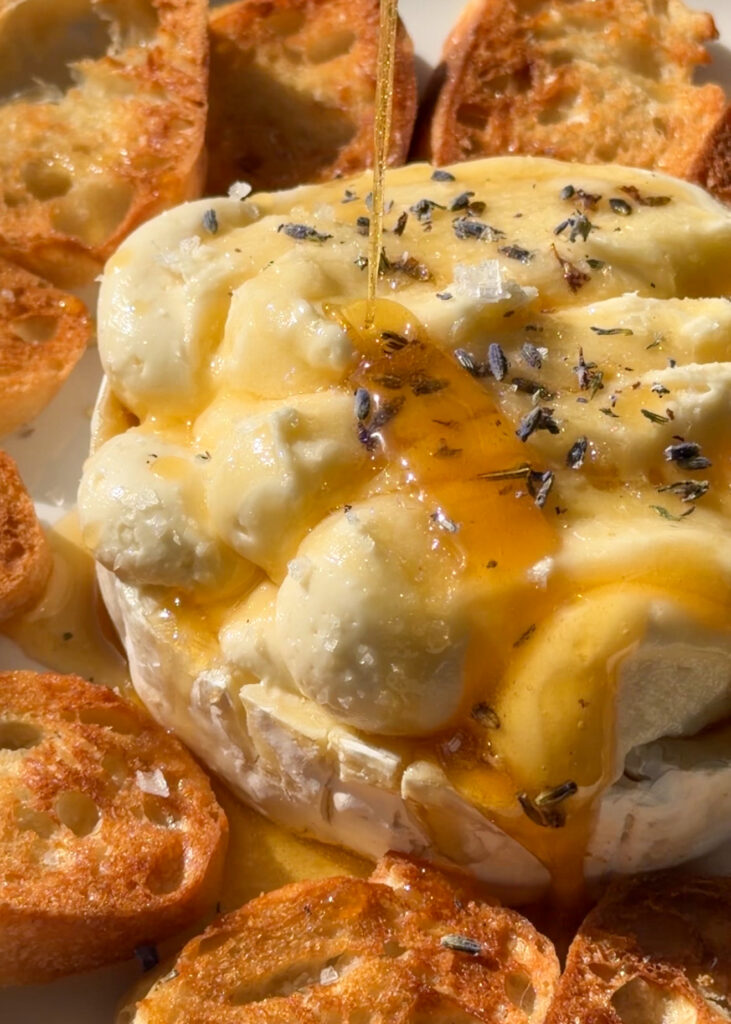
The absolute genius of this move? We are taking two entire wheels of brie, scooping out the hearts, whipping them into a cloud-like mousse, and piping every last bit of that volume back into just one of the rinds. Using two wheels is the secret to achieving that towering, bakery-case dome. It gives you the extra real estate to pile the cheese high with those swoopy swirls that sit well above the rind’s edge.
Visually, it’s a showstopper, but the texture is where the real victory lies. By whipping the brie, we break down that cold, rubbery resistance and incorporate air until it reaches a melt-in-your-mouth consistency.
Then comes the lavender honey. It sounds fancy (because it is), but it melts into the warm, whipped cheese like it truly belongs there. Sweet, floral, a little unexpected—without crossing into “soapy” territory, which is always the concern with lavender. A pinch of flaky salt pulls everything back to earth. The soft, floral sweetness of lavender honey perfectly balances the rich, buttery fat of the cheese, tying everything together. And it’s pretty!
This lavender honey brie is one of those recipes that feel restaurant-level but take almost no effort and minimal active prep time. The only variable is patience. Waiting for your brie to come to room temperature (15 minutes tops) so it whips properly. As long as your brie is properly soft, you’re about 15 minutes away from something wildly impressive.
Why you’ll love this recipe
- The “wow” visual appeal: The towering, billowy swirls overflowing from the rind look like an expensive, chef-crafted restaurant dish, but the technique is unbelievably simple. This whipped brie with lavender honey looks wildly impressive with minimal effort.
- Next level texture: If you’ve ever struggled with the gummy texture of cold brie, this airy, butter-soft texture will completely change how you eat it.
- Sweet + salty + creamy + floral: You actually get it all at once. The rich, lactic depth of the brie. The delicate sweetness of honey. And that tiny pop of salt that keeps things from going flat, and just enough lavender to make it feel intentional rather than perfumey.
- Turns a simple cheese course into a centerpiece: Not a supporting character, not something tucked into the corner of a board. This is the thing people gather around. The height, the swoops, the glossy honey pooling in those ridges… it has presence.
Tips that matter
The triple-cream upgrade: Standard supermarket brie works perfectly fine. But if you want to elevate this to pure luxury, look for a triple-cream brie (labeled ‘triple crème’—brands like Saint André or Fromager d’Affinois). It produces a noticeably richer, more decadent whip.
Temperature is non-negotiable: This whipped brie with lavender honey recipe literally lives or dies by how soft your brie is before you whip it. If it is cold, it will be dense, lumpy, and impossible to pipe. When in doubt, give it more time on the counter until it feels almost runny inside.
Tool check: A stand mixer with a paddle attachment is ideal, but a hand mixer on medium speed works beautifully (it might just take up to 3 minutes). Do not attempt this by hand with a whisk; the result will be uneven and exhausting.
The piping hack: If you don’t have a pastry bag, a standard zip-lock bag with a ½-inch corner snipped off works perfectly. Alternatively, you can just spoon the whipped brie back into the rind and use the back of a spoon to create rustic, gorgeous swoops and swirls.
Crowd control: This whipped brie appetizer serves 4–6. However, if you tuck this into the corner of a massive, sprawling cheeseboard with other meats and fruits, it can easily serve 8 people.
Respect the lavender: Use only culinary-grade dried lavender for the garnish! Lavender sold for sachets or potpourri is often treated with chemicals. And remember, raw lavender is highly potent. A tiny pinch (10–15 tiny buds) is all you need.
Substitutions & swaps
- Cheese: If you prefer a slightly earthier, funkier flavor profile, Camembert is a flawless 1:1 swap for the brie.
- Honey: If you haven’t made the lavender honey yet (go make it!), use regular honey and skip the lavender.
- Dippers: If you are catering to a gluten-free crowd, thick slices of crisp green apple or Asian pear are phenomenal vessels for this cheese.
What to serve this with
- The vessel: Warm, toasted baguette slices or sturdy, seeded artisan crackers are mandatory to hold the weight of this cheese.
- The accompaniments: Fresh figs, green grapes, or thinly sliced prosciutto look gorgeous on the board next to this.
When should I make this?
- The ultimate starter: This whipped brie with lavender honey easily feeds 4–6 people as a generous shared appetizer, or up to 8 if it is part of a larger, sprawling cheese board. Make it for holiday gatherings, spring patio nights, or anytime you need a high-impact starter.
Make-Ahead & Storage
- The 2-hour window: You can whip the brie up to 2 hours ahead of your party. Keep it loosely covered at room temperature. Do not refrigerate it after whipping—the cold will cause it to stiffen back up! Pipe and finish the cheese just before serving.
- Storage: If you have leftovers, store them in an airtight container in the fridge for up to 5 days. It will lose its airy, whipped texture and solidify, but it still tastes incredible spread onto hot toast the next morning.
Common Mistakes & How to Avoid Them
- A lumpy, dense whip: This happens when you try to whip cold cheese. The fix? Patience! Ensure your brie is completely soft to the touch before it ever hits the mixer.
- Gluey, stiff cheese: If you walk away and let the mixer run too long, the cheese can lose its structure and turn gummy. Stop mixing right at the 1 to 2-minute mark, the second it looks like airy butter.
- Tearing the “display” rind: If you scoop too aggressively, you’ll puncture the bottom or sides of the rind. Work gently with a small, flexible spatula, and remember you have a “practice” rind with the second wheel!
Whipped Brie with Lavender Honey
Ingredients
- 2 wheels of brie 8–12 oz each — the interior of both wheels is whipped together and piped into just one rind, which gives you the extra volume needed for a tall, fluffy result; look for wheels that feel soft and yielding, not firm; triple-cream brie (labeled ‘triple crème’) will whip even more luxuriously but regular brie works well
- Lavender honey (homemade or store bought) for drizzling — see the Lavender Honey recipe; quantity to taste, typically 1–2 tbsp
- Flaky sea salt Maldon or fleur de sel preferred; do not substitute fine table salt
- Culinary dried lavender finely chopped, for garnish — use sparingly (a small pinch); must be labeled ‘culinary grade.’
- Freshly cracked black pepper — optional adds subtle heat to balance the floral notes
- Toasted baguette slices or sturdy crackers for serving
Equipment
- Stand mixer with paddle attachment (preferred) or hand mixer
- Piping bag with a large round or open star tip (or a zip-lock bag with one corner snipped — approx. ½ inch opening)
- Sharp knife for scoring and slicing the rind
- Small spoon or flexible spatula for scooping
- Serving board or plate
Directions
Bring the Brie to Room Temperature
- Remove the brie from the refrigerator and set it on your counter, still in its packaging or on a plate. Allow it to sit at room temperature for 1 to 2 hours. The cheese is ready when it feels very soft throughout — press gently on the top; it should give easily and feel almost runny inside. Do not rush this step. Cold brie will not whip properly: it will be dense, lumpy, and difficult to pipe. In a warm kitchen (75°F+), 45–60 minutes may suffice. In a cool kitchen, plan for the full 2 hours.
Open and Hollow the Rind
- Using a sharp knife, score around the top rind of both wheels in a circle about ¼ inch from the edge. Slice or peel off the top rind of each and set aside. Using a small spoon or flexible spatula, gently scoop all the soft interior cheese from both wheels into the bowl of your stand mixer. Choose the better-looking rind to use as your serving vessel — set it aside with its sides and bottom intact. The second rind can be discarded. Scrape as close to the sides of each wheel as possible without tearing through the rind walls, maximizing the amount of cheese you collect.
Whip the Brie
- Attach the paddle attachment to your stand mixer. Beat the scooped brie on medium speed (setting 4–5 on a KitchenAid) for 1 to 2 minutes. The brie will go from a dense, soft mass to a lighter, noticeably fluffier texture. Stop and scrape down the sides of the bowl once halfway through. The finished texture should be smooth, creamy, and airy — like a very soft whipped butter. Do not overmix: exceeding 2 minutes can make the cheese gluey or lose structure. It should hold soft peaks when a spatula is pulled through it.
Fill the Piping Bag
- Transfer the whipped brie into a piping bag fitted with a large round or open star tip. If using a zip-lock bag, snip approximately ½ inch off one corner. Work quickly — the cheese will begin to firm slightly as it sits, especially in a cool kitchen. If it becomes difficult to pipe, let it rest at room temperature for a few more minutes to soften again.
Pipe into the Rind
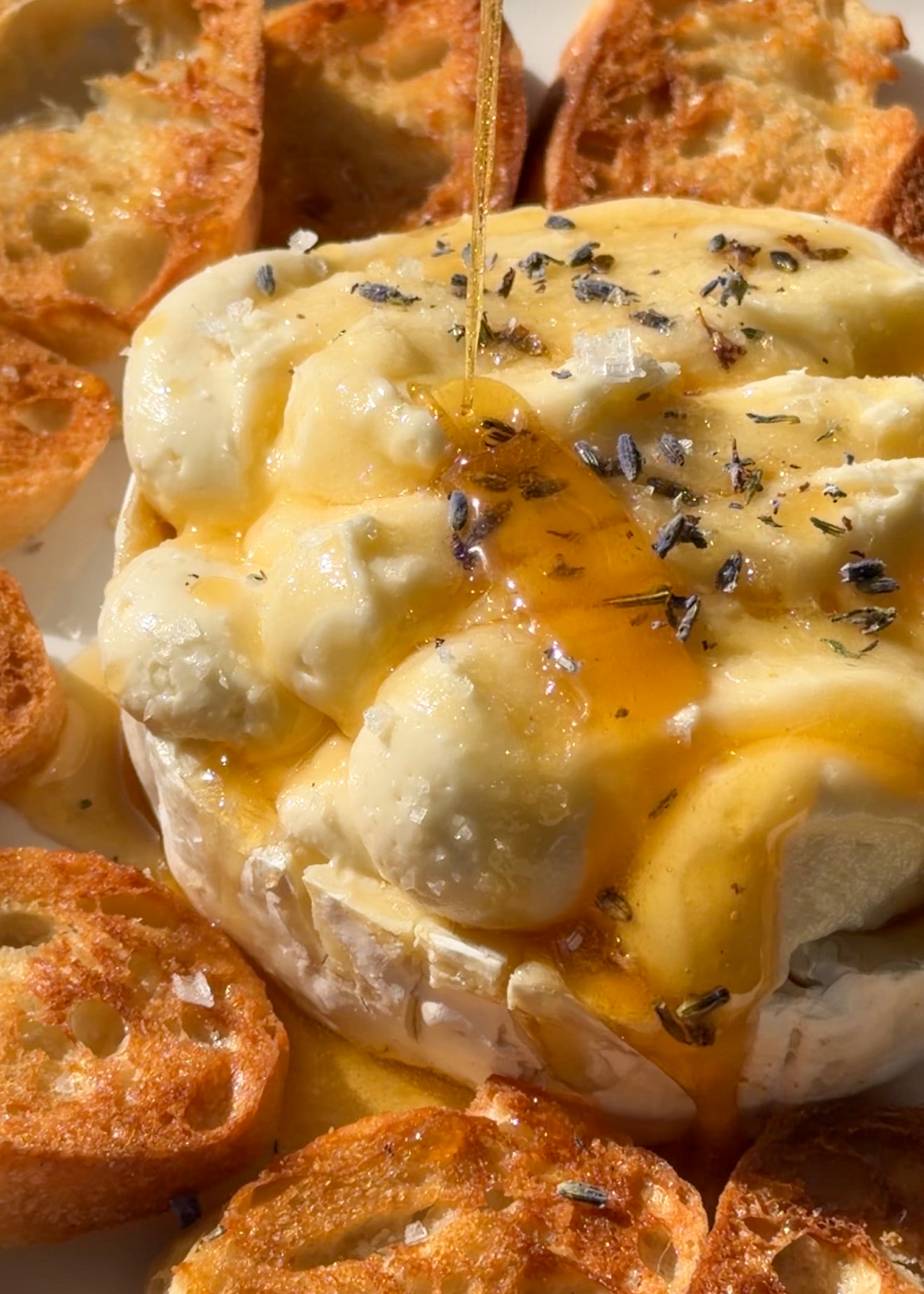
- Hold the piping bag just above the hollow rind and pipe the whipped brie back in using slow, overlapping swirls. Start from the outside edge and work inward and upward. Because you have the interior of two wheels going into one rind, you will have significantly more filling than the rind can contain flush — this is intentional. Keep building upward, piling the whipped brie into a generous, tall mound well above the rim of the rind. The goal is an impressive, billowy dome that dramatically overflows the edges. Do not press the tip into the cheese; keep it hovering just above the surface as you pipe.
Finish and Serve
- Drizzle lavender honey generously over the top of the piped brie — about 1 to 2 tablespoons, letting it pool in the valleys of the swirls. Sprinkle with flaky salt (a two-finger pinch, distributed evenly). Add a very small pinch of finely chopped culinary lavender as garnish — err on the side of less, as raw lavender is potent and can easily overwhelm. Add a few cracks of black pepper if desired. Serve immediately with warm toasted baguette slices or crackers. For best texture, serve within 30 minutes of assembly — the whipped brie will gradually firm as it cools.
Lavender Honey
Ingredients
- 1 12–16 oz full container honey Raw, unfiltered honey is ideal for depth of flavor; commercial clover honey works fine; avoid strongly flavored honeys like buckwheat, which compete with the lavender
- 1/4 cup Culinary dried lavender must be labeled ‘culinary grade’ or ‘food safe’; do not use lavender meant for sachets, candles, or potpourri
Equipment
- Small saucepan
- Fine mesh sieve or cheesecloth
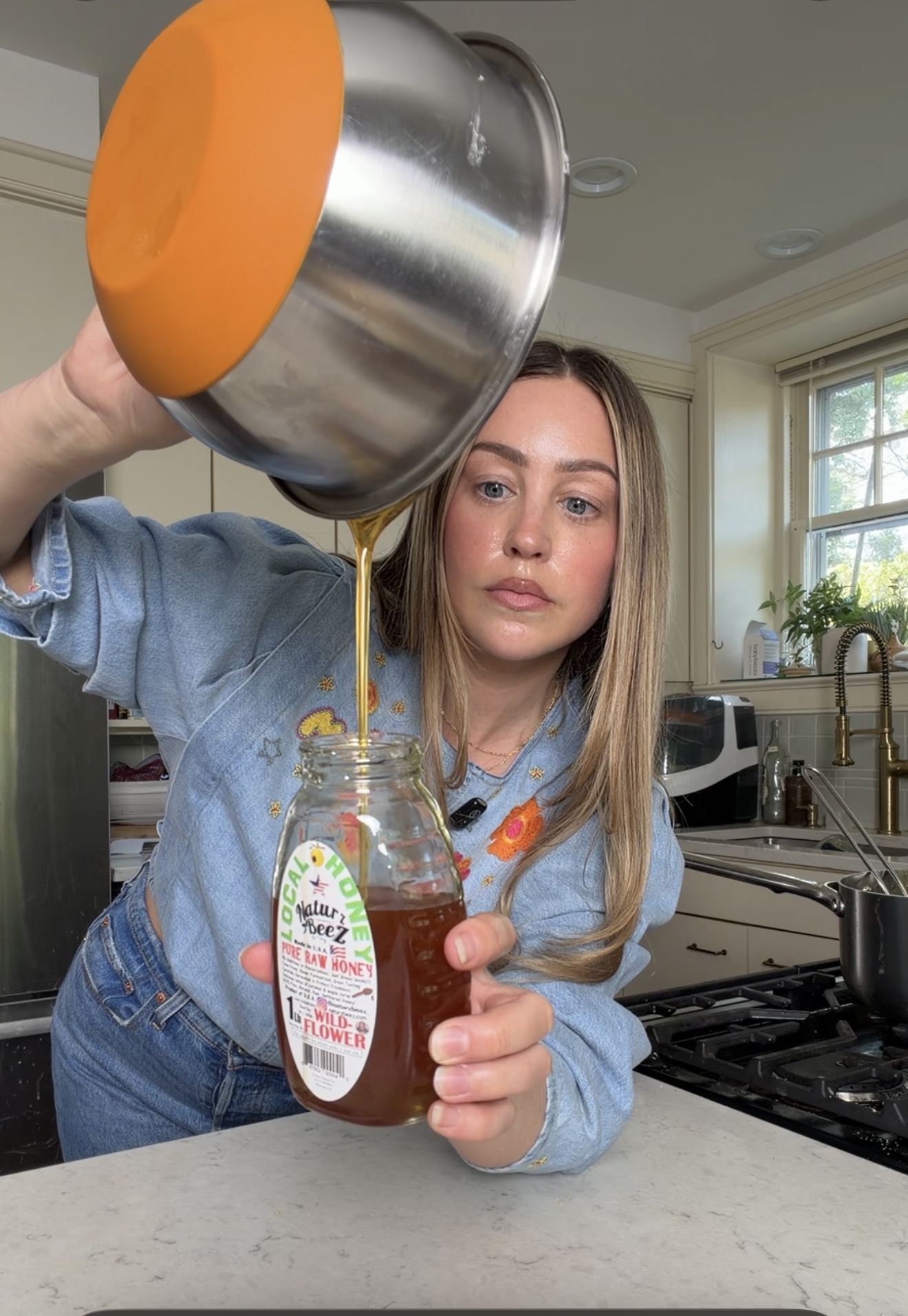
- Clean glass jar with lid (mason jar or the original honey jar, rinsed)
- Silicone spatula or wooden spoon
- Instant-read or candy thermometer (helpful but not required)
Directions
QUICK METHOD — 20 TO 30 MINUTES
- Use this method when you need lavender honey the same day or prefer a lighter floral note. The honey will taste fresh and bright, with lavender as a background flavor rather than the star.
Loosen the Honey
- If your honey is very thick or crystallized, place the sealed jar (with lid loosened by one turn) in a bowl of hot tap water for 5–10 minutes to loosen it before pouring. This is a convenience step only and is not strictly necessary if your honey pours freely.
Warm the Honey
- Pour the honey into a small saucepan. Warm over low heat, stirring occasionally, for 2–3 minutes until the honey is loose, glossy, and pourable. You are aiming for approximately 100–110°F — warm to the touch but not hot. If you have a thermometer, do not exceed 120°F at this stage. Do not let it simmer, bubble, or steam.
Add Lavender and Infuse
- Remove the pan from heat entirely. Stir in the dried lavender. Let sit undisturbed for 15–20 minutes. The honey will cool slightly and the lavender will begin releasing its oils. Taste at 15 minutes — if the flavor is where you want it, proceed to straining. For a slightly stronger result, wait the full 20 minutes.
Strain
- Pour the honey through a fine mesh sieve into a clean jar, pressing gently on the lavender with a spoon to release any honey trapped in the buds. Discard the strained lavender. Let the honey cool to room temperature before sealing the jar — about 20–30 minutes on the counter.
Result
- A bright, lightly floral honey. Lavender is present but gentle. Well-suited for everyday drizzling, baking, or pairing with mild cheese.
LONG INFUSION METHOD — 2 HOURS TO OVERNIGHT
- Use this method when you want a richer, more pronounced lavender flavor, or when making a batch to keep on hand. The extended steep time allows the essential oils to fully dissolve into the honey, producing a deeper, more complex result that improves slightly over the following 1–2 days as the flavor continues to mellow and integrate.
Loosen the Honey
- Same as the Quick Method: if the honey is thick or crystallized, place the sealed jar (lid loosened) in hot tap water for 5–10 minutes before pouring.
Warm the Honey
- Pour honey into a small saucepan. Warm over the lowest possible heat for 2–3 minutes, stirring, until just loose and pourable — approximately 95–110°F. The goal is simply to make the honey fluid enough to fully surround the lavender. Remove from heat as soon as it is pourable.
Add Lavender
- Stir in the dried lavender off the heat. Give it a thorough stir to ensure all lavender is submerged and coated in honey.
Long Steep
- Allow the mixture to sit at room temperature, uncovered or loosely covered with a clean cloth, for a minimum of 2 hours. For the fullest, most developed flavor, steep overnight — 8 to 12 hours is ideal. The honey will cool to room temperature and thicken back up; this is normal and does not affect the infusion. Taste at 2 hours and again before straining to gauge intensity.
- Optional warm re-infusion: If you want to push the flavor further without extending the time, you can gently rewarm the honey (without the lavender) to about 100°F after the initial steep, then let it cool again. This slightly accelerates extraction. Do not reheat with the lavender already in it beyond 110°F.
Strain
- When the flavor is where you want it, pour through a fine mesh sieve or cheesecloth into a clean jar, pressing on the lavender to extract as much honey as possible. Discard the spent lavender. Allow honey to cool completely — at least 30 minutes — before sealing.
Result
- A deeply floral, complex honey with a noticeable lavender character. The flavor will be pronounced immediately after straining and will mellow very slightly over the first 24–48 hours as the aromatic compounds settle. Well-suited for cheese boards, drizzling over desserts, stirring into tea, or as a gift.





Rate & Review
WHAT DID YOU THINK OF THIS RECIPE?
This was so good!!