Lobster spaghetti doesn’t need hype. If you say it out loud and someone doesn’t immediately understand why lobster spaghetti is good, that’s on them. This version is rich, balanced, deeply lobster-forward without the work of making our own lobster stock, and very intentionally saucy. The sauce is bisque-adjacent in spirit—tomato paste cooked down until sweet, cognac for warmth, cream for body, saffron for aroma—but it eats like pasta, not soup, not seafood stew, not something that requires a ladle.
The goal here is clarity. Lobster spaghetti should taste like lobster. But it’s not as simple as just using lobster in the sauce. You have to build the sauce to compliment the lobster meat and enhance it to taste its best. The sauce should cling without smothering. And the pasta should look almost too saucy in the pan, because that’s how you know it’ll be right in the bowl. It took me a few attempts to find the middle ground to get the best lobster pasta possible, and I hope you like this recipe!

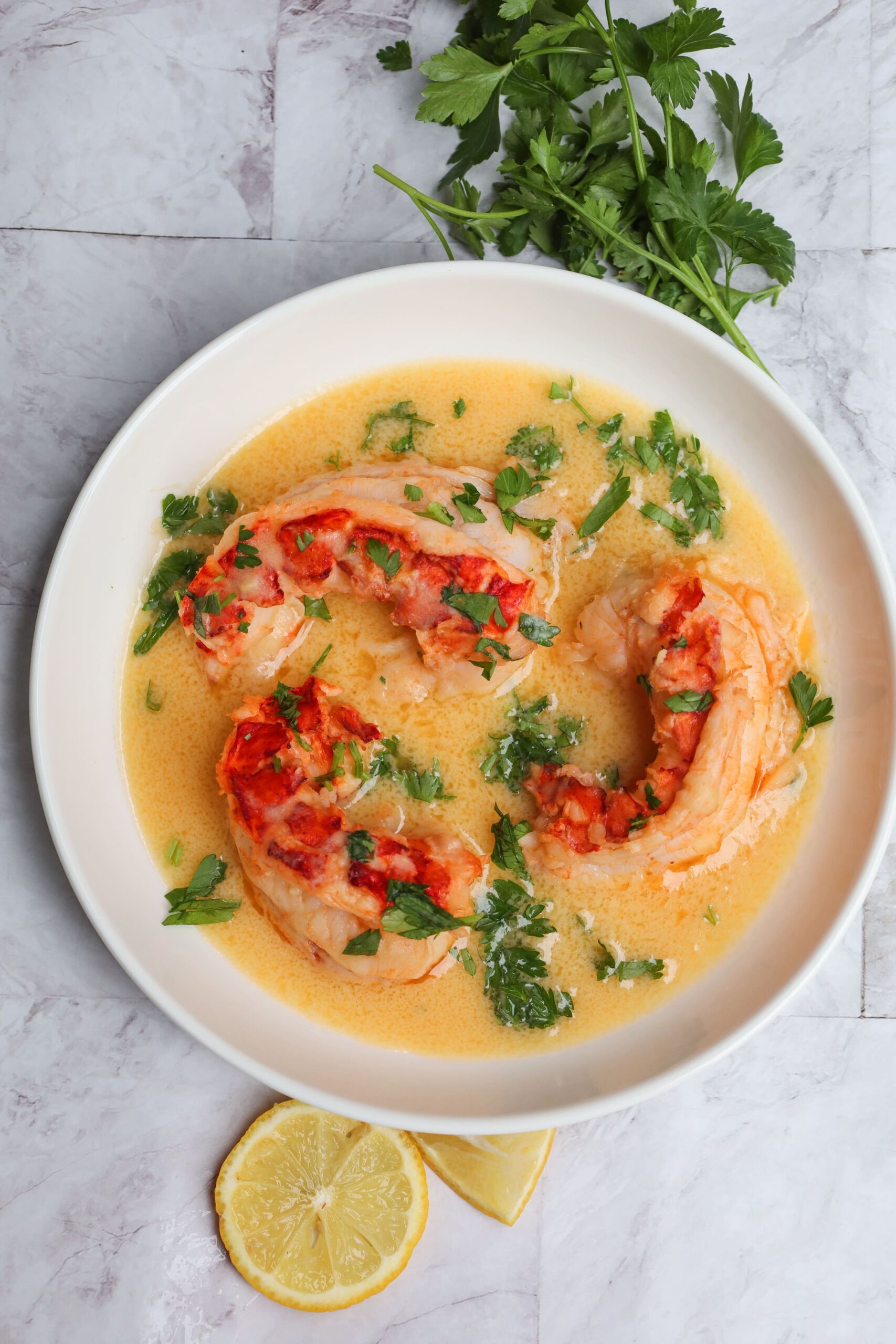
In this recipe, the lobster does two things. The tails get gently poached, split in half, and saved for the top because they look great and deserve the spotlight. Extra cooked lobster meat gets folded straight into the sauce so every bite of lobster spaghetti actually delivers. Saving the lobster cooking water for the pasta isn’t optional. That lobstery pasta water actually ties this entire thing together without us having to make our own stock.
And then there’s the brown butter chive crunch. Toasted panko in nutty butter (inspired by my family’s lobster rolls where the butter gets a little browned on the toasted bun) and finished with chives right at the end. Of course, the crunch and garnish is optional and the lobster spaghetti will still shine, but I love a good contrast, and this easy pop of crunch and flavor is a no brainer for me!

Why you’ll love this recipe
- The lobster is layered in, not just perched on top, so the sauce actually tastes like what it claims to be
- The cream is doing structure, not heaviness—balanced by acid, aromatics, and restraint
- Brown butter chive crunch gives contrast and a reset between bites, not just texture
- It reads restaurant-level but cooks on a normal timeline with zero gymnastics
Substitutions and swaps
- Cognac can be swapped for brandy or dry sherry, but keep it warm and oxidative—no neutral alcohols
- If you don’t have saffron, leave it out rather than muddying the sauce with a stand-in
- Tarragon can be replaced with a short strip of orange peel for lift without herbal dominance
- Linguine or bucatini work well if lobster spaghetti isn’t happening
Tips that matter
- Tomato paste should be brick-red and sweet before you move on; raw paste kills depth
- Lobster only goes in to warm—once it’s cooked, you’re done touching it
- Pasta water is seasoning, structure, and emulsifier all at once—use it deliberately
What to serve this with
- Something green and sharp to cut the richness
- Bread strictly for cleanup, not distraction
- A drink with acidity and chill—this dish is already doing plenty
When should I make this
- When you want dinner to feel considered but not precious
- Small groups where timing matters
- Nights when you want to cook like a professional without announcing it
Wine pairings / cocktail suggestions
- Chablis or lean white Burgundy with enough acid to keep up
- Champagne if you want lift and contrast
- A cognac sidecar if you’re leaning fully into the theme
Make ahead, storage & reheating
- Sauce can be made a day ahead; hold lobster separately and fold in when reheating
- Store leftovers airtight for up to two days
- Reheat slowly with a splash of cream or stock to reset the emulsion
- High heat will break the sauce and toughen the lobster—don’t rush it
Common mistakes & how to avoid them
- Dry pasta: the sauce should look loose in the pan; it tightens in the bowl. If it dries up or looks too thick, loosen it with pasta water or extra stock (if using stock, use it sparingly.)
- Rubbery lobster: overcooking happens on the reheat—add cooked lobster at the end and let residual heat warm it through
- Flat flavor: build depth early, then season decisively at the end

Lobster Spaghetti with Brown Butter Chive Crunch

Ingredients
For the Lobster
- 4 lobster tails
- 1 –1.5 lb cooked lobster meat I bought mine at Wild Fork but you can buy it at your local seafood shop or grocery store
- Salt
For the Sauce
- 3 tbsp unsalted butter plus 1 tbsp cold butter to finish
- 1 large shallot finely minced
- 3 cloves garlic finely grated
- 1 small can tomato paste 6 oz / about ¾ cup
- ½ cup cognac
- 2 cups seafood stock
- 1¾ cups heavy cream
- 6 saffron threads up to 8–10 for stronger flavor, bloomed in 1 tbsp warm stock
- 1 bay leaf
- 1 whole sprig tarragon
- Salt & pepper
For the Brown Butter Chive Crunch
- 1 tbsp butter
- ¾ cup panko
- Pinch of salt
- Lemon zest
- Finely sliced chives
For the Pasta
- 1 lb spaghetti
- Reserved pasta water at least 1½ cups
Directions
Prep the aromatics & saffron
- Warm 1 tablespoon seafood stock, add the saffron threads, and set aside to bloom.
Poach the lobster
- Bring a pot of well-salted water to a gentle boil. Add the lobster tails and cook 4–5 minutes, until the shells are bright red and the meat is just opaque. Transfer briefly to ice water, remove the meat from the shells, and slice each tail in half lengthwise for plating. Reserve the lobster cooking water for the pasta.
Make the brown butter chive crunch
- In a large skillet, cook the butter over medium heat until nutty and lightly browned. Add the panko and a pinch of salt and toast until deeply golden. Remove from the heat, stir in the lemon zest and chives, then transfer to a bowl. Wipe out the skillet.
Build the sauce
- In the same skillet, melt 3 tablespoons butter, letting it lightly brown if you want extra depth. Add the shallot and cook 2–3 minutes until soft, then add the garlic and cook for 30 seconds. Stir in the tomato paste and cook, stirring constantly, 3–4 minutes until brick-red and sweet-smelling. Deglaze with the cognac and simmer until reduced by about half and the sharp alcohol smell is gone. Add the seafood stock, saffron bloom (threads and liquid), heavy cream, bay leaf, and tarragon sprig. Simmer 18–20 minutes, stirring occasionally, until thick, glossy, and bisque-like. Remove the bay leaf and tarragon and season lightly with salt and pepper.
- Stir the cooked lobster meat into the sauce and warm gently for 1–2 minutes, keeping the heat low.
Cook the pasta & finish
- Bring the reserved lobster cooking water back to a boil. Cook the spaghetti until just shy of al dente, reserving at least 1½ cups pasta water. Transfer the spaghetti directly into the sauce and toss, adding ¾–1 cup pasta water until the sauce is loose, silky, and generously coats the pasta. Finish with the cold butter.
- Twirl the pasta into bowls, spoon extra sauce over the top, add a lobster tail half (and a claw, if using), and finish with the brown butter chive crunch.